

Diplomats gather in Geneva this week to decide whether to open negotiations on legally binding rules for autonomous weapons, machines that can pick and attack targets with little or no human control. Critics call them “killer robots”. The talks form part of the UN review conference of the Convention on Conventional Weapons, which brings together 128 countries, according to an AFP report carried by the Times of Israel.
Why now
Armies are using artificial intelligence to find and strike targets faster. Russia has reportedly used fully autonomous drones with deadly effect in Ukraine, and Ukraine’s own defence industry is pushing towards autonomous drone swarms. The Red Cross’s weapons chief, Laurent Gisel, said the need for regulation has taken on “new urgency”. Human Rights Watch warned that civilians would be left dangerously exposed if the meeting fails to act decisively.
Who is for and against
Last month, 163 states at the UN General Assembly backed a resolution calling for negotiations. Five voted against: the United States, Russia, Belarus, Israel and North Korea. Nine abstained, including Iran, Saudi Arabia and China. North Korea announced last week what it described as a new AI-enabled torpedo.
Washington has proposed a five-year process to produce a non-binding instrument, while campaign groups and the Red Cross want a one-year timetable. The Red Cross also wants two kinds of weapon banned: those whose behaviour is unpredictable and those designed or used to target people directly. Observers quoted in the report think agreement to start binding talks is unlikely this week, given opposition from the major military powers.
UN Secretary-General António Guterres and Pope Leo XIV have both warned against handing life-and-death decisions to fully autonomous machines.
A matter of conscience
This is a technology story, not a prophecy claim. For readers who think in biblical terms, the question is old: who answers for killing? Scripture sets “life and death” before people and tells them to choose life (Deuteronomy 30:19), and it warns that “there is a way that seems right to a man, but its end is the way to death” (Proverbs 14:12). Whatever the diplomats decide, responsibility for the use of force has so far always rested with human beings, and the debate is whether that will remain so.
Reporting note: This is based on a single wire report. Vote counts and positions are as stated in that report, and we have not checked them against the UN record.
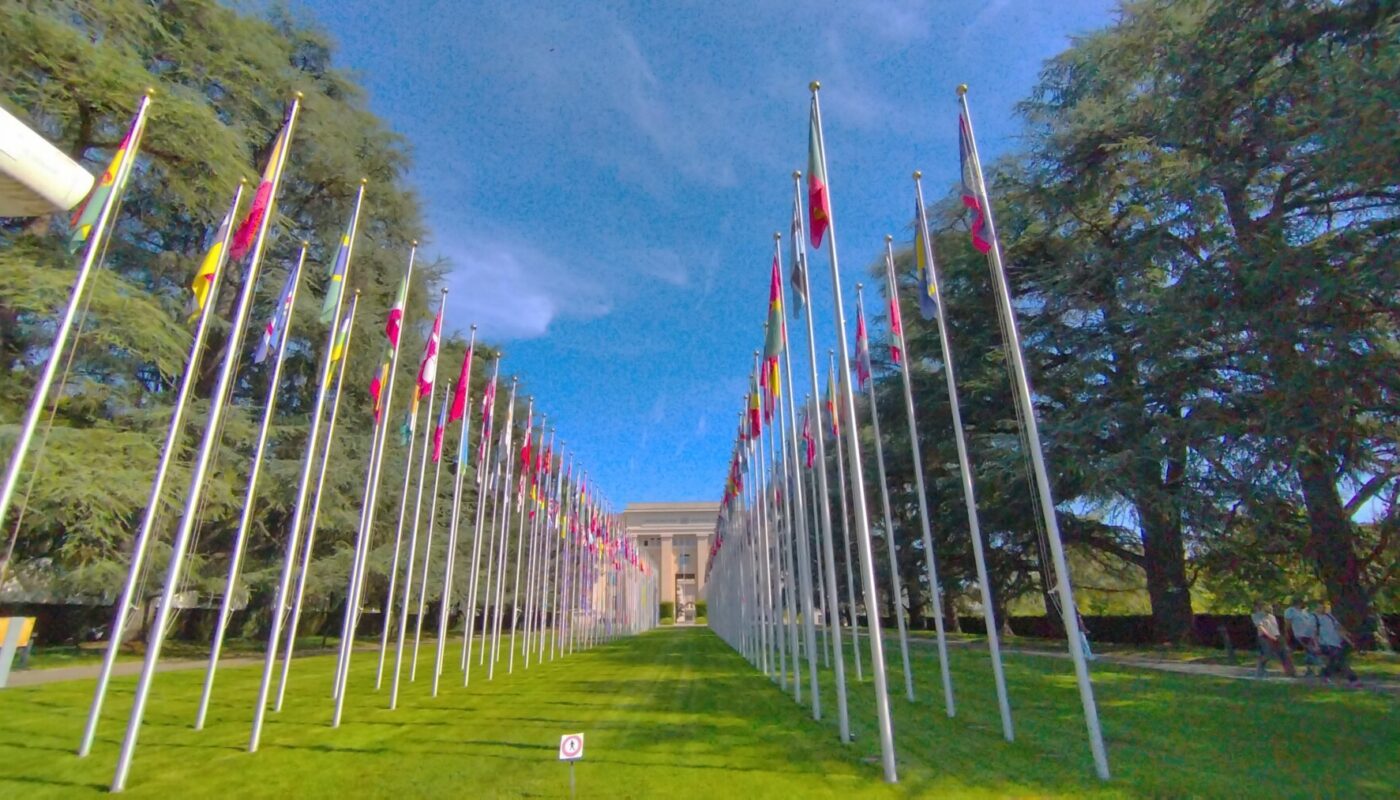
Photo: MediaSociety / CC BY-SA 4.0 / Wikimedia Commons. The UN’s Palais des Nations in Geneva, where the talks are held.