

Spain’s Supreme Court has ordered the Interior Ministry to certify, within two days, whether mandatory security checks were completed on 61,603 rented voter-verification devices, according to the identity-industry news site ID Tech. The devices are intended to authenticate the MiDNI digital national ID app at polling stations during the general election on 29 November.
ID Tech reported that the administrative chamber issued a procedural ruling ahead of deciding on precautionary measures requested by the Iustitia Europa party. That request followed the Central Electoral Board’s decision on 5 November to lift an earlier suspension. The court asked for technical documentation showing the readers had been verified.
The devices were bought under a direct emergency contract worth 7,000,455 euros including VAT, ID Tech said, and the postal operator Correos is due to distribute them to polling stations at 28.06 euros per delivery and pick-up.
The case is one example of how governments are moving identity checks onto smartphone credentials, and of the legal scrutiny that can follow. The court has not yet ruled on the party’s request for precautionary measures, and the report does not say how the ministry has responded.
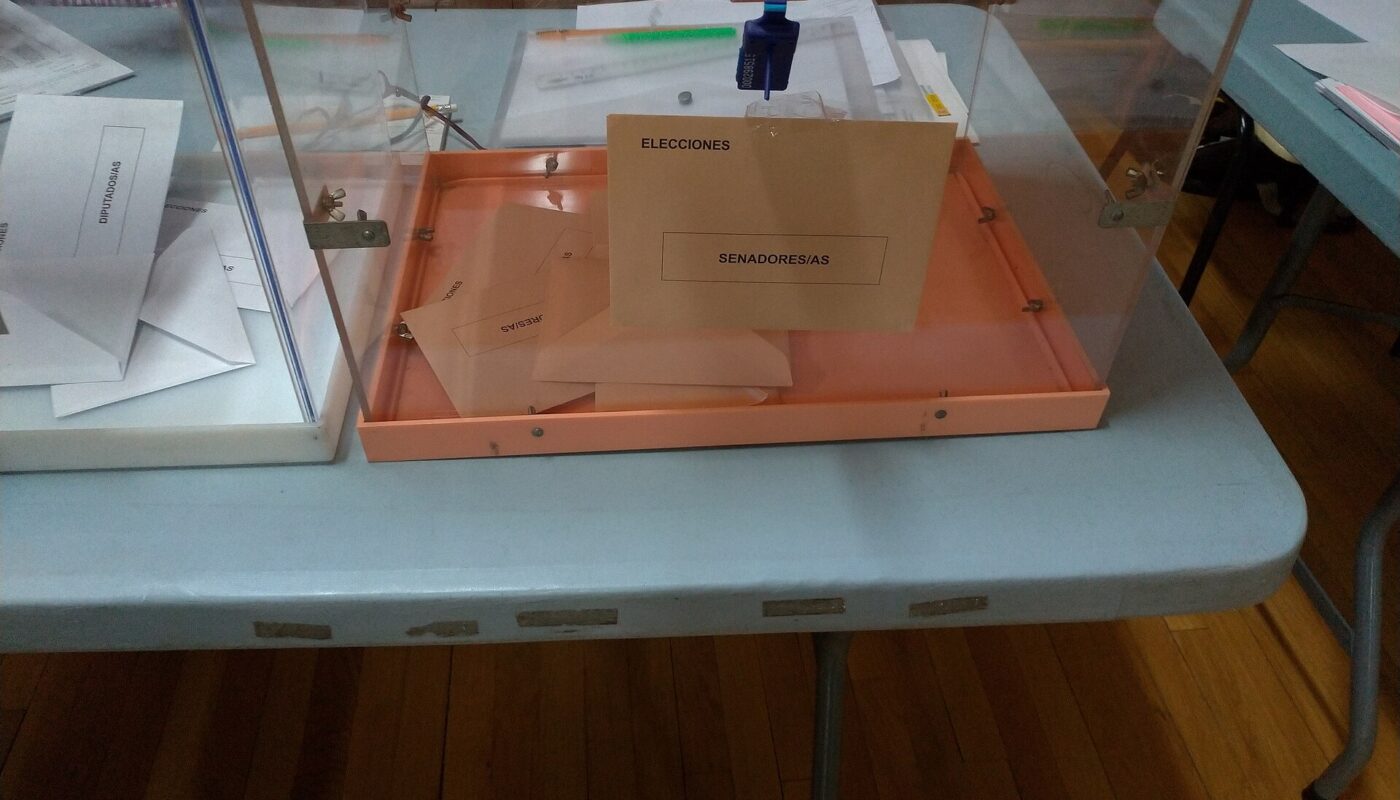
Reporting note: This summary relies on one outlet, ID Tech’s digest of 18 November 2026; the court ruling itself was not read. Whether the readers pass the checks, and whether the court grants any measures, is not yet known. The photo is an illustration from a 2019 election in Madrid, not the devices in this story.
Photo: LauraHale / CC BY-SA 3.0 / Wikimedia Commons (illustration: ballot box at a Madrid polling station in 2019, not the equipment in this story)