
A “black sky” event is the planners’ name for a very long, very wide power failure: not the few hours of darkness that follow a winter storm, but an outage that lasts days or weeks across whole regions. The term is used by emergency planners, not by the weather services, and it is worth knowing what it does and does not mean.
What the term means
In a state utility-regulator presentation on the subject, a black sky event is described as an extraordinary, hazardous event that causes large power outages, sometimes across several states, lasting much longer than ordinary weather or equipment outages and cascading into other essential services. The causes it lists are electromagnetic pulse (EMP) events, severe cyberattacks, severe weather, severe solar storms and physical attacks. Hurricane Maria in Puerto Rico is given as a real example of a long outage.
The planning assumptions are sobering but practical. Phones, email and satellite links could be disrupted or degraded for days or weeks. Fuel for backup generators and vehicles becomes an early concern. Water and sewage systems depend on power. Hospitals and care homes are expected to shelter in place where they can, rather than evacuate patients.
What has actually happened
Quebec, 1989. A geomagnetic storm in March 1989 caused a complete nine-hour outage of the Hydro-Québec grid. It remains the best-known example of a solar storm taking down a power system.
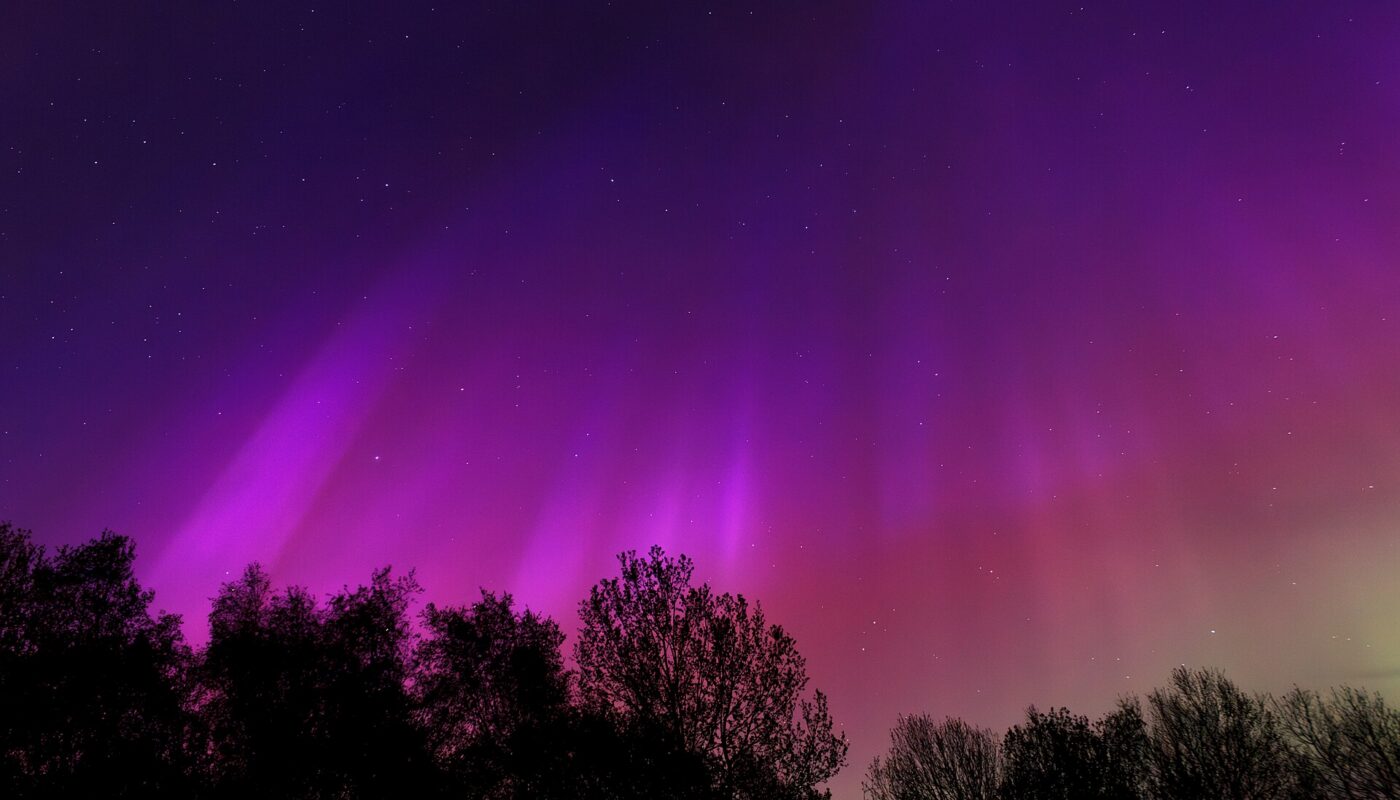
May 2024. NOAA rated the storm of 10–13 May 2024 as G5, “extreme”, the first at that level since the 2003 Halloween storms, according to the encyclopaedia’s summary of agency reports. Canadian utilities prepared and no outages were reported there. New Zealand’s grid operator declared a grid emergency and took some lines out of service as a precaution. Starlink satellites had degraded service, and farmers using precision GPS reported problems with planting. In other words, grids coped better than in 1989, but the effects on satellites and navigation were real.
Spain and Portugal, April 2025. At 12:33 on 28 April 2025 the whole of mainland Spain and Portugal lost power, according to the European grid association ENTSO-E. Its expert panel’s final report, published on 20 March 2026, found no single cause. It blamed a combination of interacting factors, including oscillations, gaps in voltage control and generators disconnecting in a cascade. Spain’s government said in June 2025 that multiple technical failures were responsible and ruled out a cyberattack. It was not a black sky event in the full sense, because power was restored, but it showed how quickly a modern grid can fail.
How big is the risk?
Estimates vary widely, and honest sources say so. The 1859 Carrington storm was far stronger than anything since. One commentator, summarising the research, cites a paper in the journal of the American Geophysical Union that puts the chance of a Carrington-scale storm at around 10% per decade; critics think that is too high.
The key weakness is the large high-voltage transformers. A federal regulator has identified about 30 critical ones, and replacement lead times are put at 12 to 24 months. A power-industry research institute (EPRI) simulated a severe storm across about 1,000 transformers in 2019 and estimated that 3 to 21 would be damaged. A critique argued that it assumed a field weaker than the level the Department of Homeland Security recommends planning for.
On EMP attacks, the same institute concluded that the worst case would be temporary disruption in a few states, while the congressional EMP Commission considers an attack more dangerous than a solar storm. Most national-security experts regard a major attack as unlikely. The experts disagree, and no one should claim certainty.
Sensible preparation
You do not need to believe in the worst case to be ready for a long outage of any cause. A few things are widely recommended:
- Keep at least three days of drinking water, long-life food and any medicines you rely on.
- Have a battery or wind-up radio, torches, spare batteries and a way to charge a phone.
- Keep some cash, since card terminals and cash machines need power.
- Agree a plan with family and neighbours, especially for older or vulnerable people.
- Know how to turn off your water, gas and electricity safely.
A word on faith and fear
This site does not claim that a black sky event would fulfil any prophecy. Scripture does, however, commend prudence without anxiety: “The prudent see danger and take refuge” (Proverbs 22:3), and Jesus tells his followers not to worry about tomorrow (Matthew 6:34). Preparing quietly, and looking out for neighbours, fits both.
Reporting note: This explainer draws on a state regulator’s planning presentation, ENTSO-E’s Iberian blackout page, an encyclopaedia summary of the May 2024 storms, and a commentator’s summary of research on solar-storm and EMP risk. Probability and damage figures are contested estimates and are not forecasts. I did not check them against the original papers.
Photo: W.carter / CC BY-SA 4.0 / Wikimedia Commons. The aurora over Sweden during the May 2024 storm.